
We were happy to be invited to be in conversation with SHIFT Liverpool, the sustainability network for cultural organisations in the Liverpool City Region. Our first public event of the year, on the 3rd of Feb, facilitated by Metal Culture & hosted at OpenEye Gallery was to dip our toes into the wider dialogue with people who have already been meeting to “collaboratively address the climate emergency and the Liverpool City Region’s ambitious 2040 zero-carbon target.” It resonates with our aims of bringing climate conversations into everyday life.
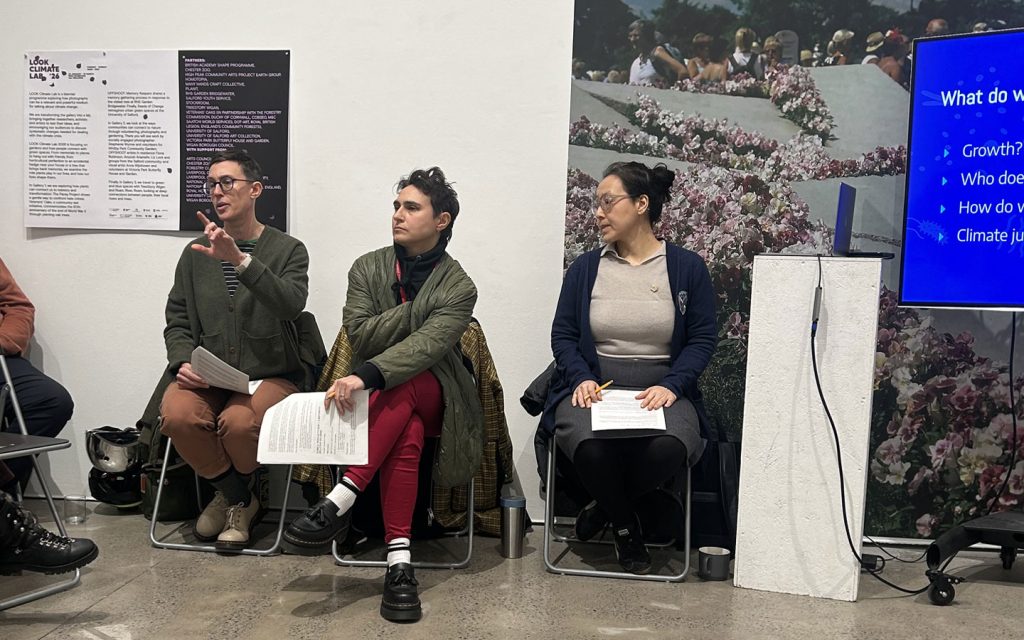
We opened up the presentation to ask ourselves many questions, chiefly…
What do you carry in this work?
Not what do you do. What do you carry? What values, what assumptions, what exhaustions? In sustainability work, we often carry urgency – the sense that time is running out, that we need to act now, act faster, do more. We carry the weight of knowing. And sometimes that weight becomes the very thing that burns us out, or worse, that keeps us repeating the same approaches expecting different results.
In our work, microbial and more-than-human life invites us to consider that the way we respond to the crisis might itself be part of the crisis. That’s not a reason to stop. It’s a reason to pause. To ask different questions.
We sought to unsettle what sustainability means in cultural contexts, through reframing the crisis as relational (not informational!), to offering the F.W.D. project as a living example of post-activist1, more-than-human creative practice. Sustainability work in cultural organisations risks reproducing the same colonial, extractive and heroic logics it seeks to challenge – unless we slow down, attend to what the world is doing with us and cultivate wonder and curiosity as a form of capacity.
Flow.Walk.Drag. offers one such practice: learning from water and microbes how to pool resources, share resistance strategies and find joy in hopeless places.
We hope to take these ideas of pooling to our community this year, in Liverpool and Margate. Please let us know if you’re interested in splashing about with us.
- “Post-activism” – not after activism, but a different relation to crisis. One that asks: what if the way we respond to the crisis is part of the crisis? What other commitments become possible when we step aside from the hero narrative?
Influenced from Bayo Akomolafe ↩︎
Leave a Reply